Prefer to watch? The full breakdown is on our YouTube channel, with more 40K and Crisis Protocol meta coverage.
1. Warhammer has never been bigger: the numbers
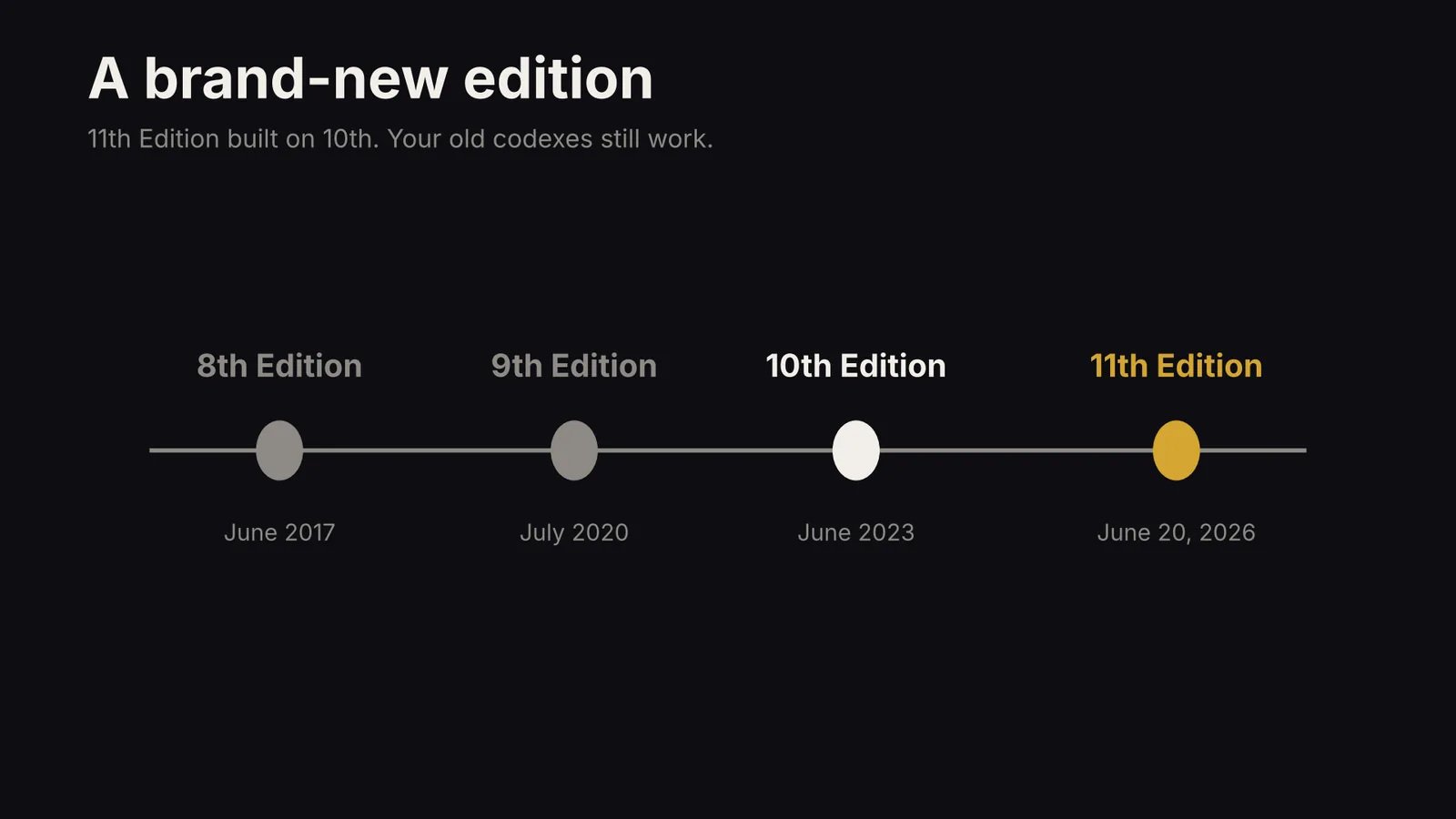
11th edition landed on June 20, 2026, three years after 10th arrived in June 2023. Unlike past edition changes it doesn't throw your books away. It's built on 10th, so the codexes on your shelf still work. That alone takes a lot of the sting out of buying in.
A record year for Games Workshop
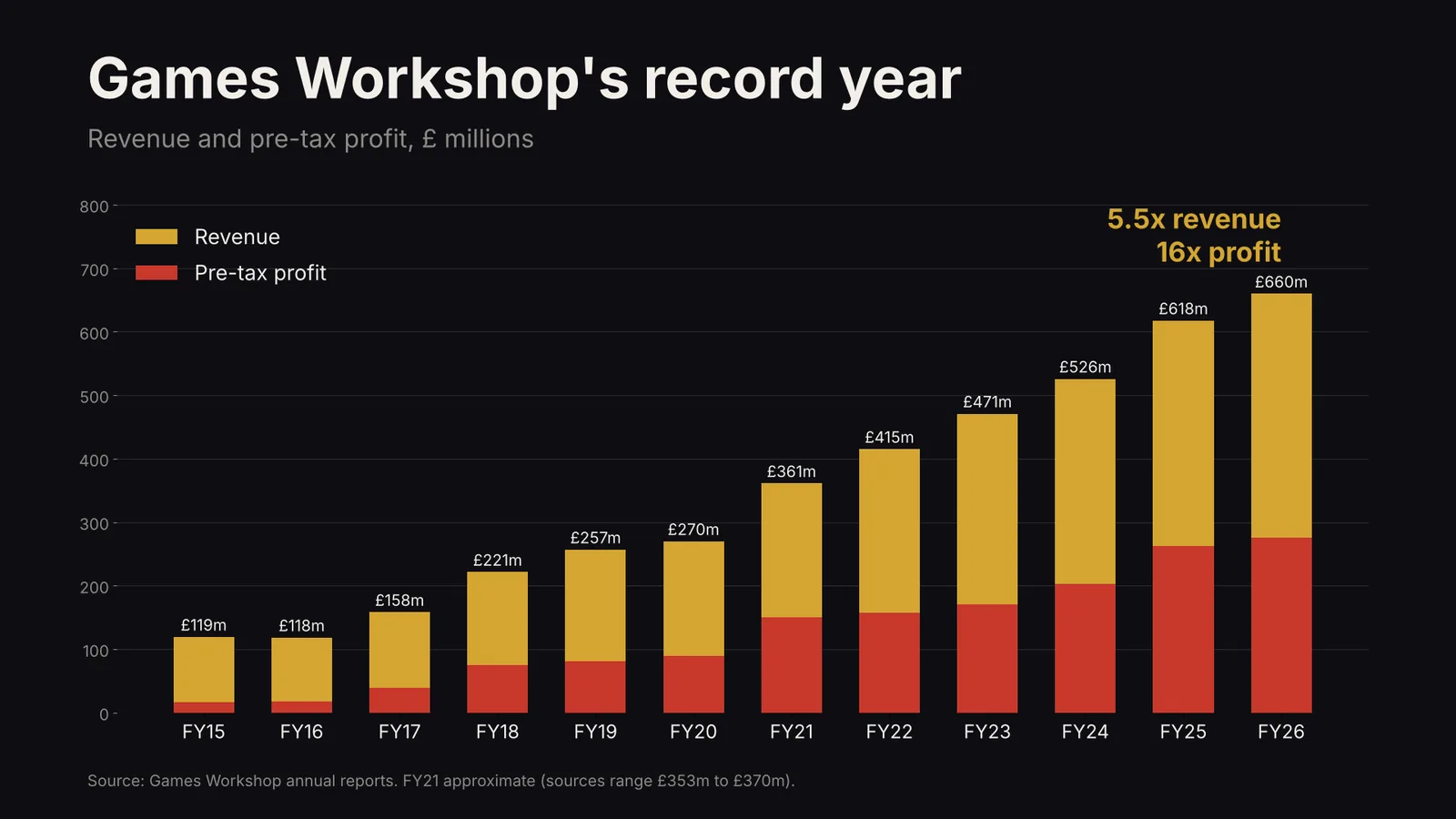
Games Workshop just had the best year in its history: £659.7 million in revenue, roughly 5.5 times what it made in FY2016, with pre-tax profit up about 16 times over the same stretch. Whatever you think of their pricing, a company growing like this keeps investing in the game, the models and the events.
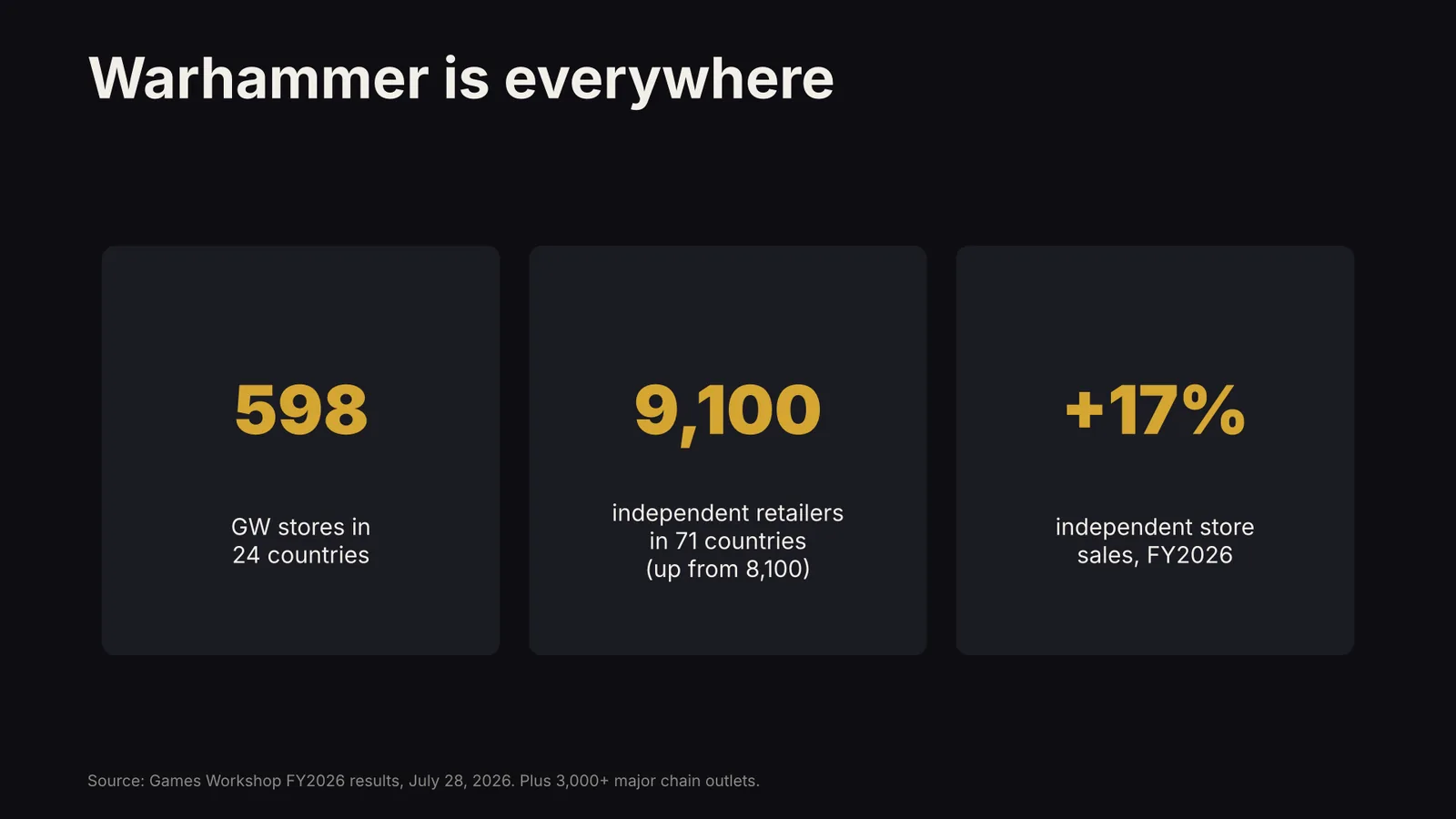
The footprint grew with it. GW now runs 598 stores in 24 countries, sells through 9,100 independent retailers in 71 countries (up from 8,100 a year earlier) and more than 3,000 major chain outlets. Sales through independent stores are up 17% in 2026 so far, which is the number I find most telling: it's local game stores, the places people actually play, that are growing fastest.
The community is growing too
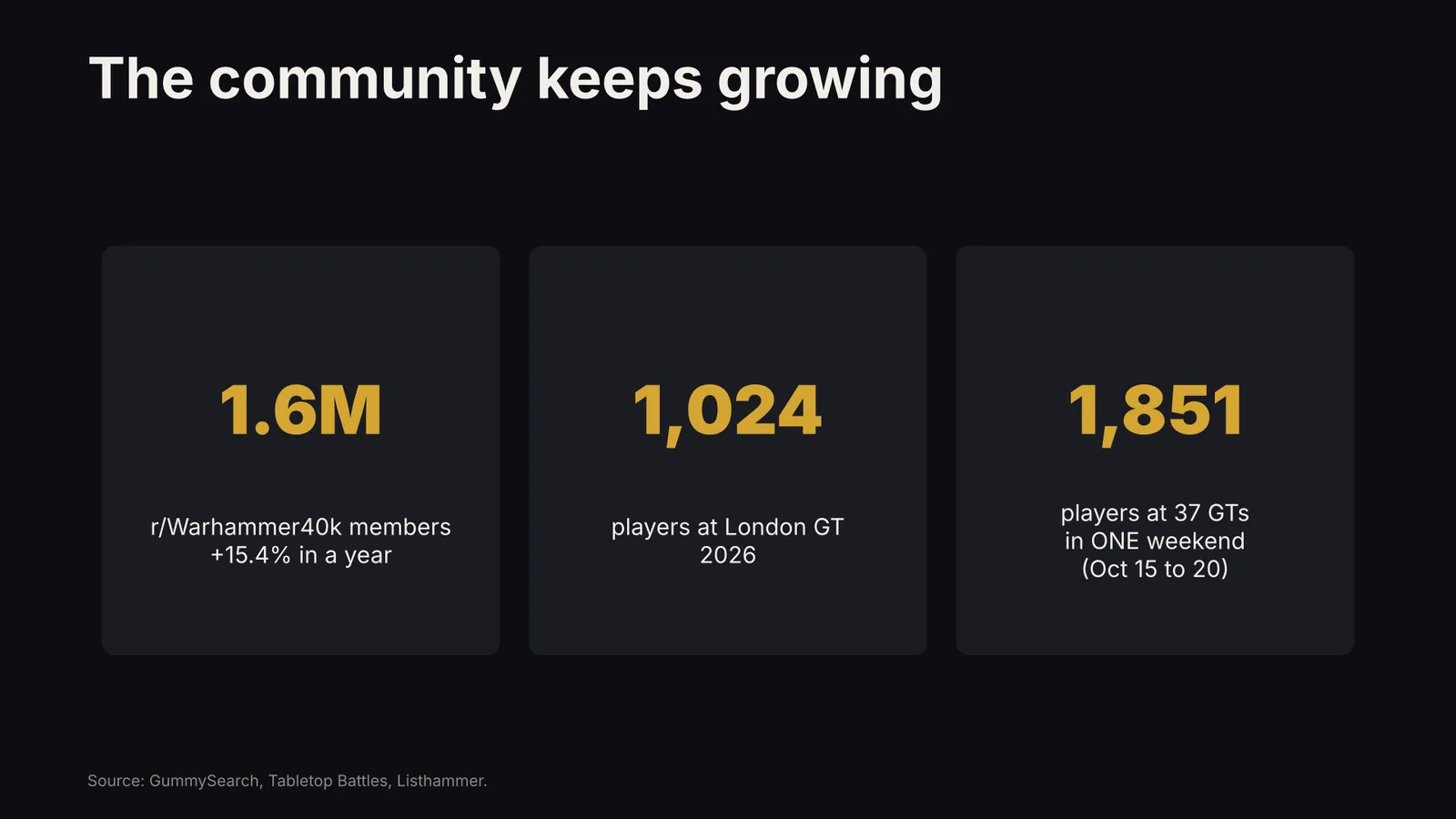
Revenue can grow because existing players spend more. What convinces me this is real growth is the people. r/Warhammer40k has about 1.6 million members, up roughly 218,000 (15.4%) in a single year. The 2026 London Grand Tournament had 1,024 players. And one mid-October weekend alone, October 15 to 20, logged 37 GT-level events and 1,851 players on Listhammer.
2. The media wave
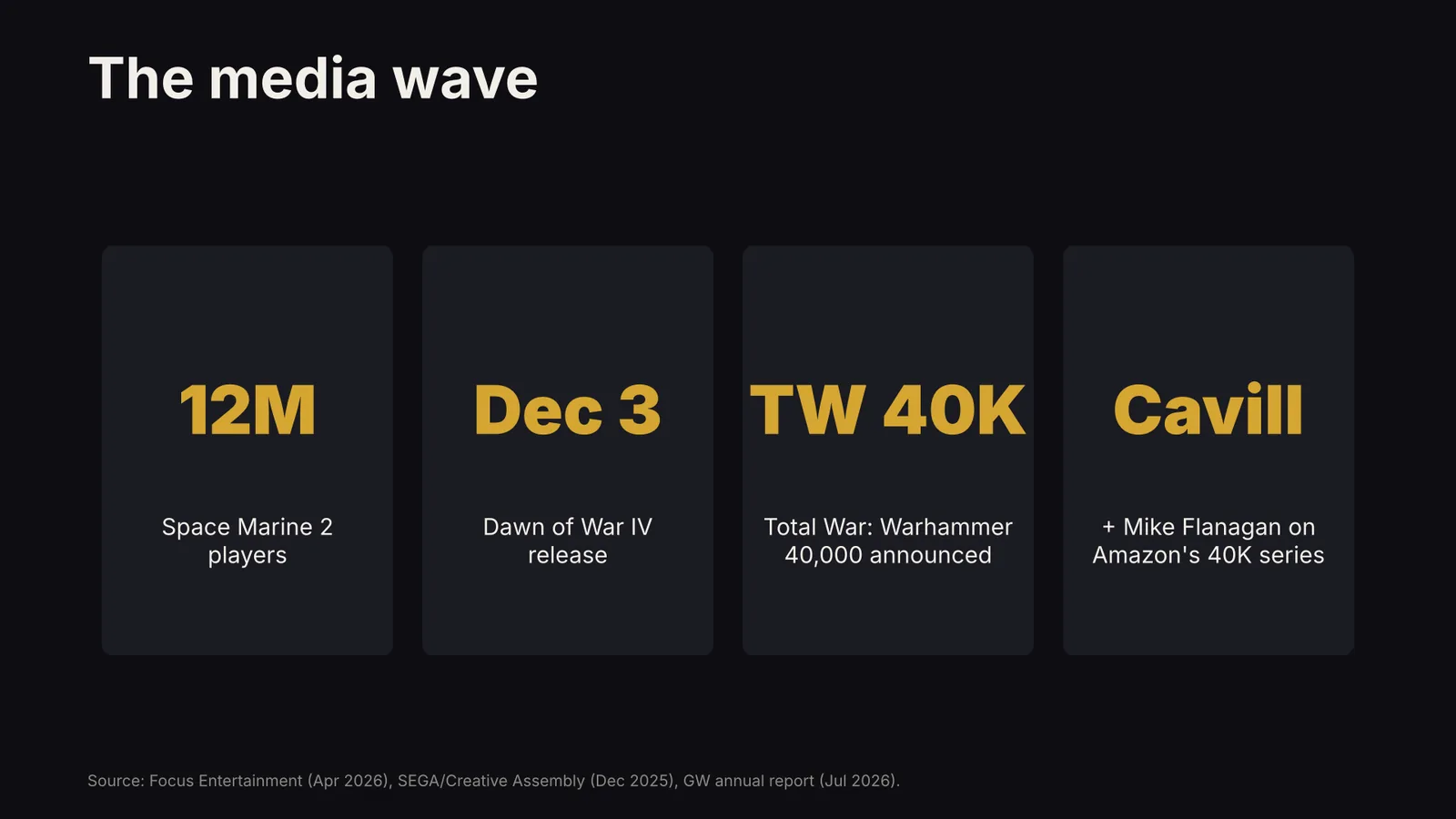
Warhammer is reaching people who have never held a paintbrush. Space Marine 2 has passed 12 million players. Dawn of War IV releases on December 3. Total War: Warhammer 40,000 was announced at The Game Awards 2025. And Amazon's 40K series now has Henry Cavill and Mike Flanagan attached.
There's a pattern here worth noticing. Total War: Warhammer brought a wave of players into the fantasy setting, and it's hard not to see that success as part of why The Old World came back. The same funnel is now pointing at 40K: people meet the setting on a screen, then want the models on a table.
3. Why I'm all in
Two reasons, and neither is about a spreadsheet.
It's a social, real-life hobby. After COVID, a lot of us wanted something that gets us out of the house and across a table from another person. 40K does that better than almost anything. You build something, you bring it, you play someone new, you talk about it afterwards.
Quantity is a quality all of its own. In Austin there's a tournament almost every weekend. When games are that easy to find you improve faster, you meet more people, and the scene feeds itself. That density of events is the clearest sign to me that the game is in its prime.
4. 11th edition review: what it got right
The headline for 11th is simple: you can play almost anything. I've played Ultramarines, Aeldari, Chaos Space Marines and Imperial Guard, and this is the first edition where the list I want to play and the list I should play are close to the same thing.
Detachment Points
Detachments now cost points, which means you can mix them. Instead of one army-wide rule that every unit has to fit, you build toward the mix you want and pay for it. It opens up a huge number of lists that simply weren't legal before.
Cover is now -1 to hit
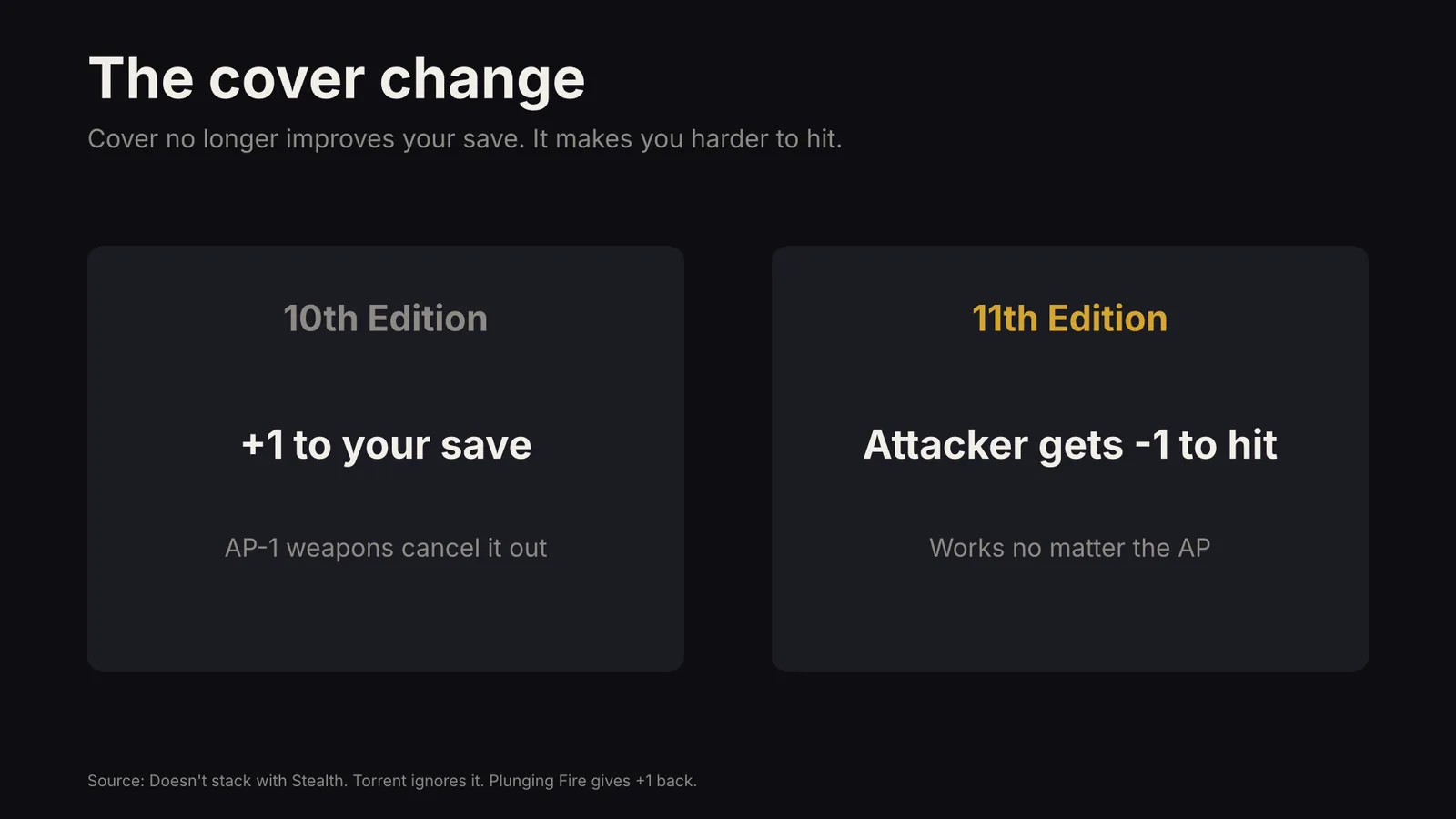
In 10th, cover gave you +1 to your save, which AP-1 weapons simply cancelled. In 11th, cover makes the attacker -1 to hit instead, so it works no matter the AP. It doesn't stack with Stealth, Torrent ignores it, and Plunging Fire gives the +1 back. The result is terrain that actually matters for every unit, not just the ones with good saves.
Force Dispositions
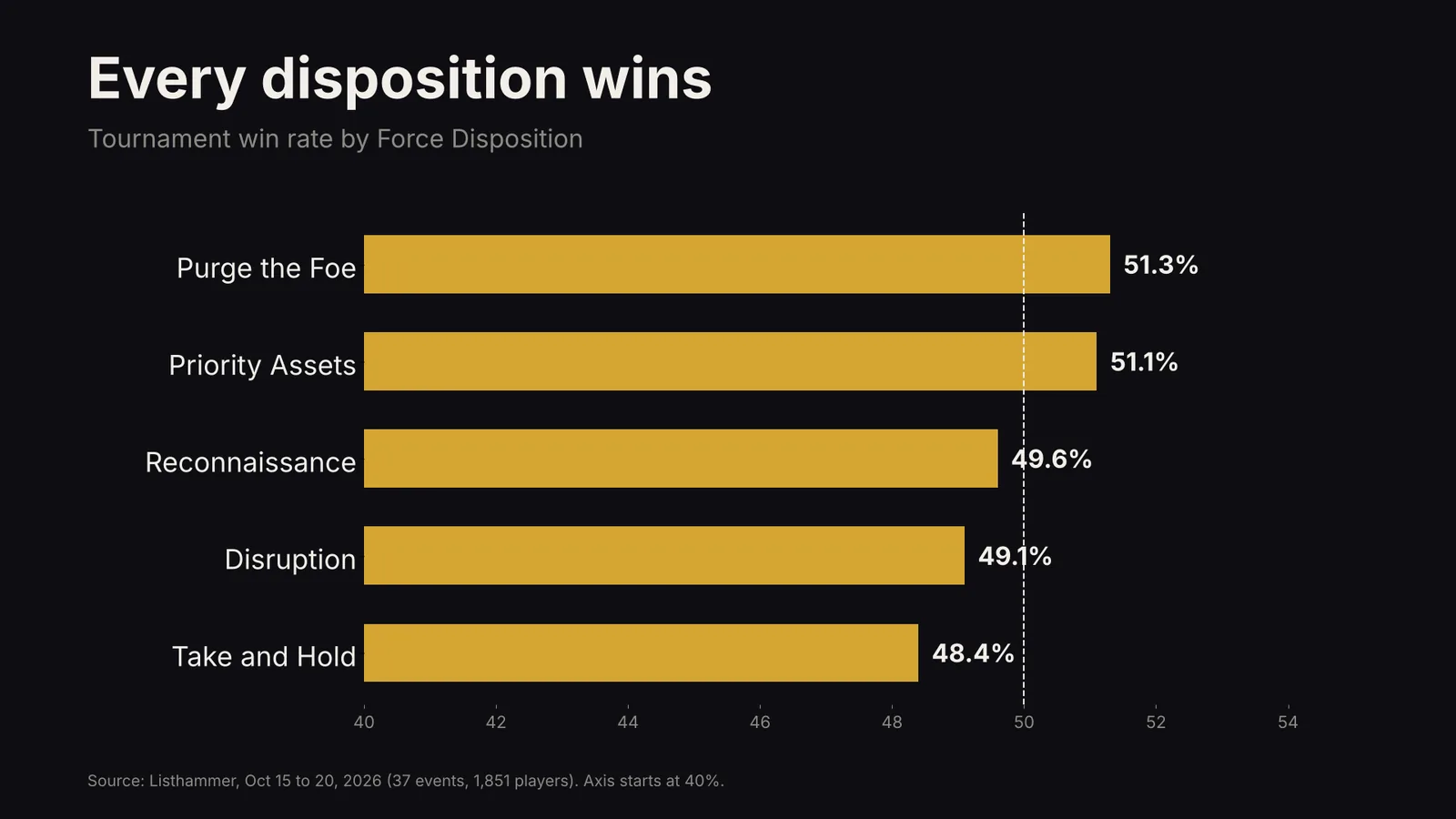
Your Force Disposition now shapes how your army plays the mission, and the early tournament data says every one of them is viable. Across 37 events and 1,851 players, win rates run from 51.3% for Purge the Foe down to 48.4% for Take and Hold. A three-point spread is about as close to even as competitive data gets.
9" coherency: no more conga lines
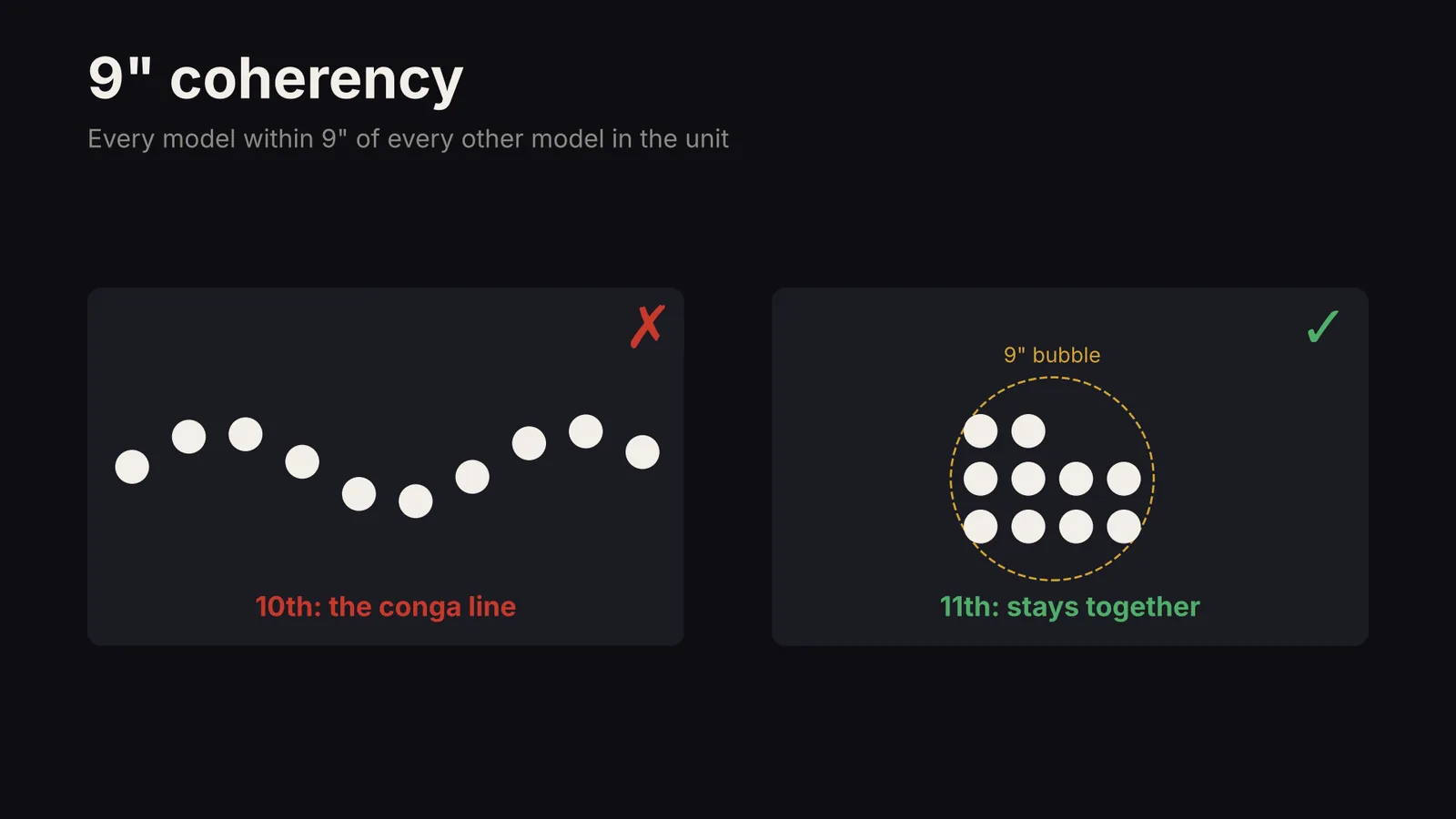
Every model in a unit now has to be within 9" of every other model in the unit. That kills the conga line, where a unit stretched across the board to grab objectives and screen space. Units stay together, which reads better on the table and plays more honestly.
Balance is unusually tight for a launch
New editions usually launch with a few broken armies and a long tail of unplayable ones. 11th is different. Early tournament results show most factions competitive from the start, which is rare for a launch, and it means you can pick the army you like the look of without signing up for a losing season.
5. What 11th edition got wrong
I love where the game is, but it has real problems, and pretending otherwise doesn't help anyone deciding whether to jump in.
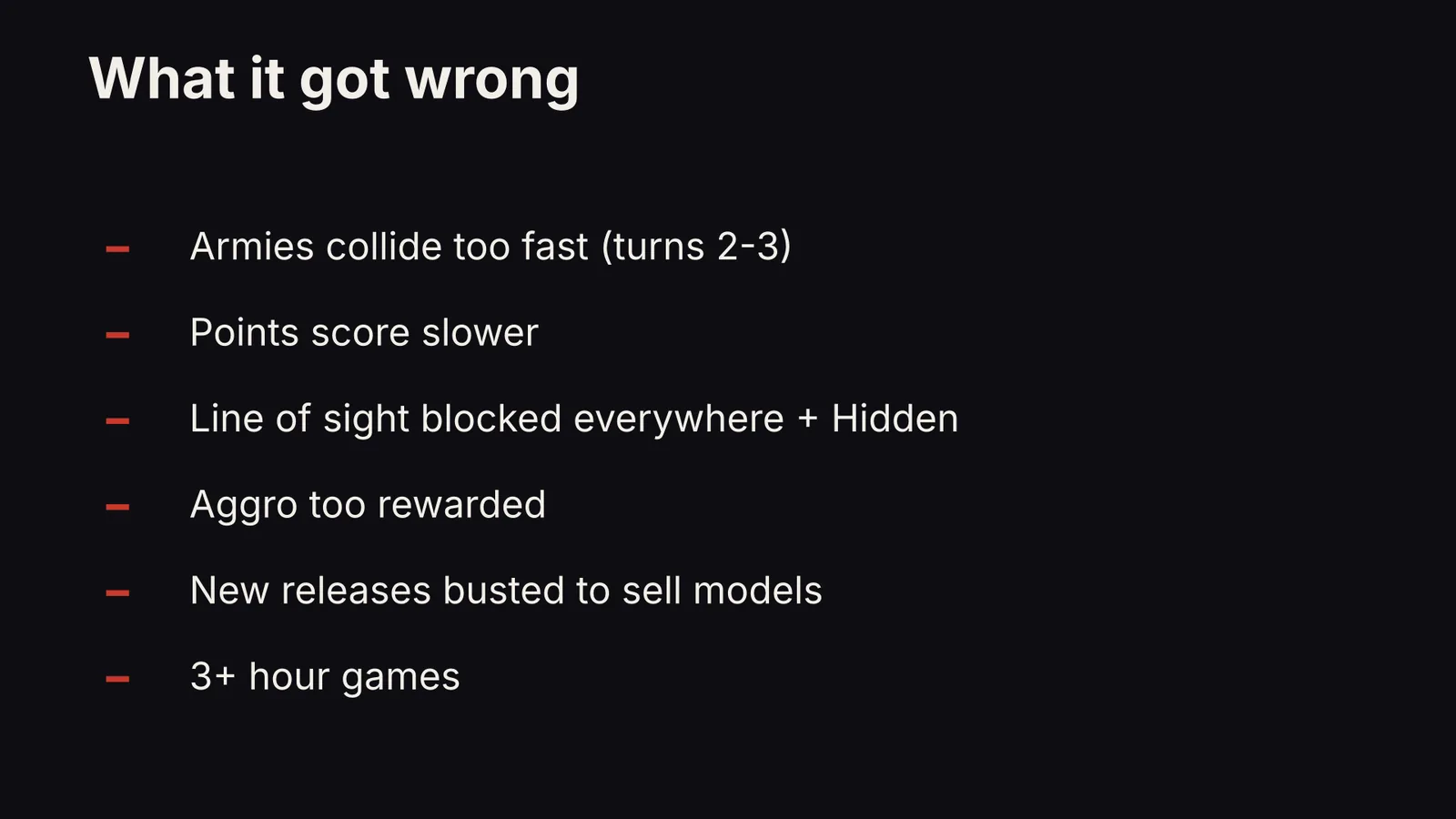
- Armies collide too fast. The fight now happens on turns 2 and 3 rather than 3 and 4, so there's less maneuvering before it gets bloody.
- Points score slower. Primary scoring ramps up later, which makes early trades feel heavier and comebacks harder.
- Line of sight is blocked everywhere. Dense terrain plus the Hidden rule can turn a turn into a series of measuring arguments.
- Aggression is over-rewarded. Combined with the faster collision, going straight at your opponent is often the best plan, regardless of army.
- New releases land overpowered. Fresh kits keep arriving strong enough to sell models, and the meta lurches each time.
- Games run 3+ hours. A full 2,000-point game routinely runs past three hours, which is hard on a five-round GT and harder on a weeknight.
6. Should you start 40K in 2026?
Yes. The rules are the most open they've been, your books don't expire, nearly every faction is competitive and there are more places to play than ever. The real barriers aren't the game. They're cost and time.
Most of us know the feeling: the army is bought, the list is written, and the models are still grey in a box. Grand tournaments expect a painted army, and a 2,000-point list can be 60 models or more. That backlog is exactly why I started Rank & File. We paint whole armies to a clean tabletop standard, priced per model, so you can spend your time playing instead of staring at the pile.
Battle Ready from $7 a model, Parade Ready from $14, Hero Grade from $50. A typical 2,000-point 40K army lands between $800 and $2,400, quoted inside 24 hours and painted in North America so nothing crosses an ocean. Not sure what that means for your list? Here's what an army costs.
Frequently asked questions
Is 2026 a good time to start Warhammer 40K?
Yes. 11th edition launched on June 20, 2026 and is built on 10th, so existing codexes still work. Early tournament results show most factions competitive, and the community is growing quickly, with r/Warhammer40k up 15.4% in a year and dozens of GT-level events running every weekend.
When did Warhammer 40K 11th edition release?
11th edition released on June 20, 2026, three years after 10th edition launched in June 2023. It builds on 10th edition rather than replacing it, so 10th edition codexes remain usable.
What are the biggest changes in 11th edition 40K?
Detachment Points let you mix detachments, cover now gives attackers -1 to hit instead of +1 to your save, Force Dispositions shape how your army plays the mission, and unit coherency is now 9 inches between every model in the unit.
How big is Warhammer 40K right now?
Games Workshop reported record revenue of £659.7 million for FY2026, about 5.5 times FY2016, with pre-tax profit up roughly 16 times over the same period. It runs 598 stores in 24 countries and sells through 9,100 independent retailers in 71 countries.
Do you need a painted army to play in 40K tournaments?
Most grand tournaments expect a fully painted army to a tabletop standard. A painting service such as Rank & File can paint a whole army priced per model, from $7 a model at Battle Ready, so you can get an army event-ready without the backlog.

John has been playing wargames for 27 years and plays 40K, Marvel Crisis Protocol and Middle-earth competitively around Austin, Texas. He founded Rank & File Miniature Painting Studio to give players a fast, affordable way to get whole armies painted. Meet the studio.
Games Workshop FY2026 annual results (July 28, 2026) and prior annual reports; GummySearch (Reddit membership); Tabletop Battles (London GT 2026); Listhammer, October 15 to 20, 2026 (37 events, 1,851 players); Focus Entertainment (April 2026); SEGA and Creative Assembly (December 2025); Deadline (July 2026). Figures are as reported at the time of writing.